
Multilingual website for an insurance company in Mongolia
A web platform integrated with government and payment systems
About the project
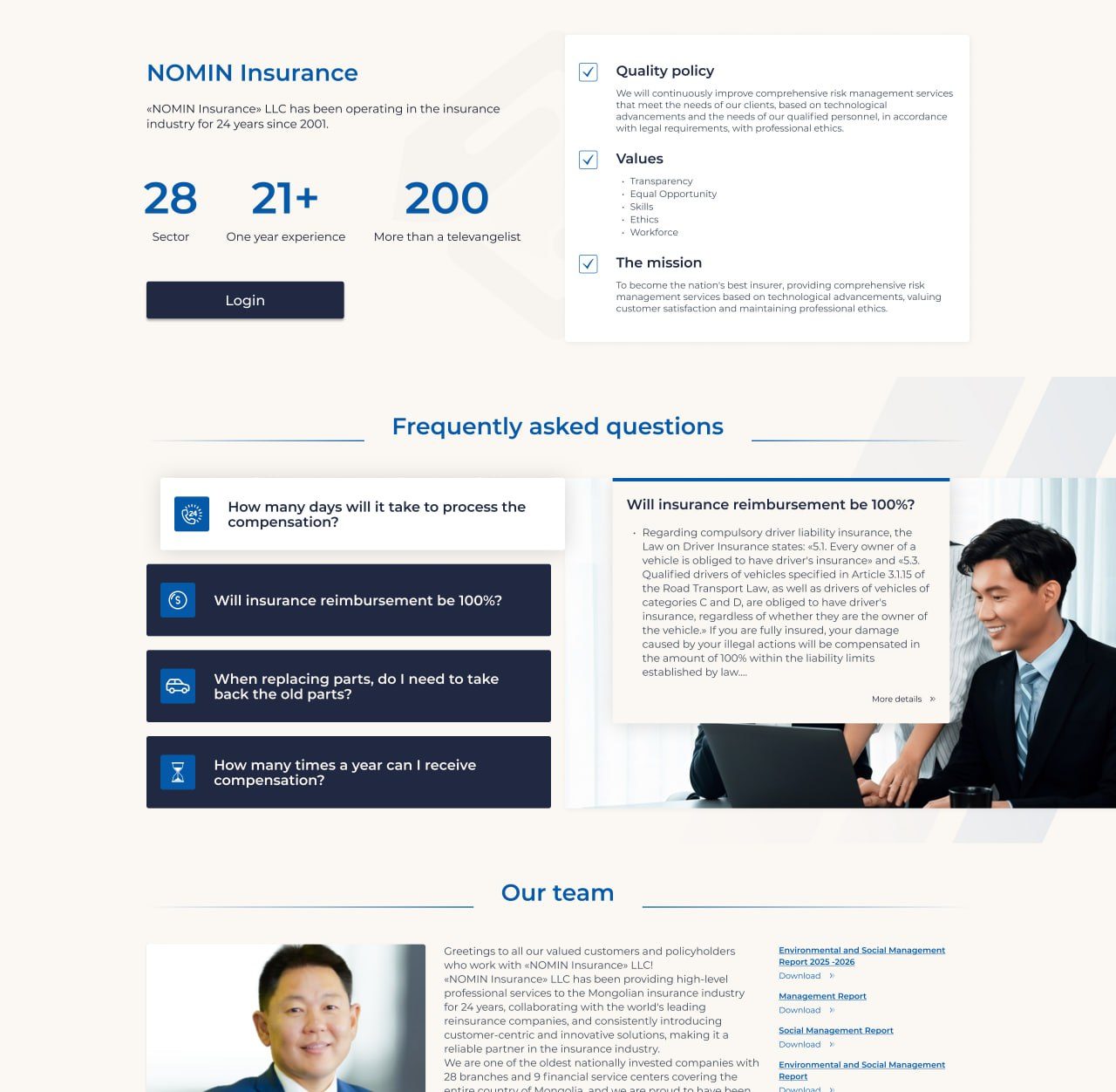
The client is an insurance company in the Mongolian market. When the project started, the company had an outdated website whose functionality did not allow integration with external services and offered no way to scale. Support for several languages was also required, as the product targets different audiences.
Interface
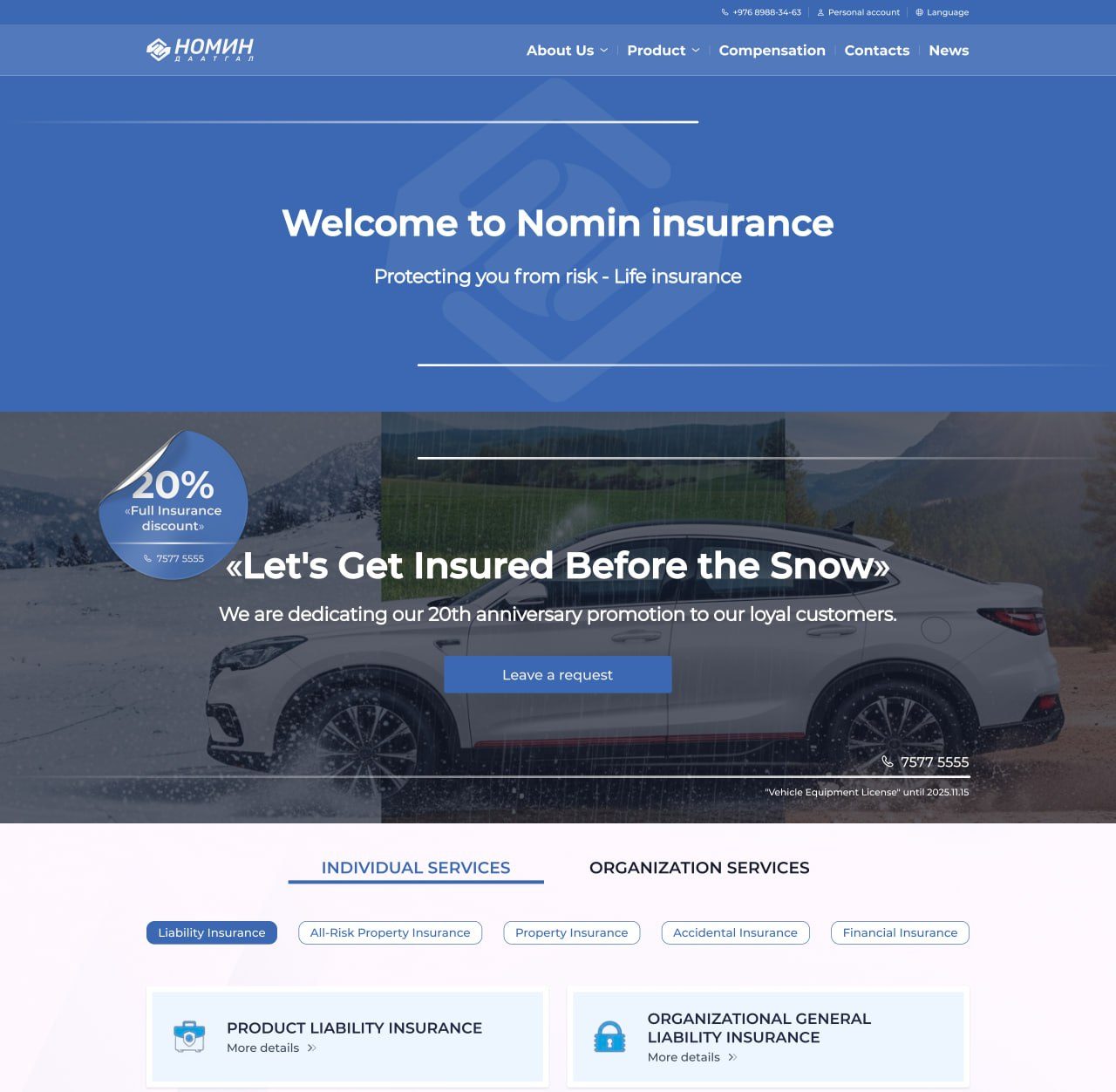
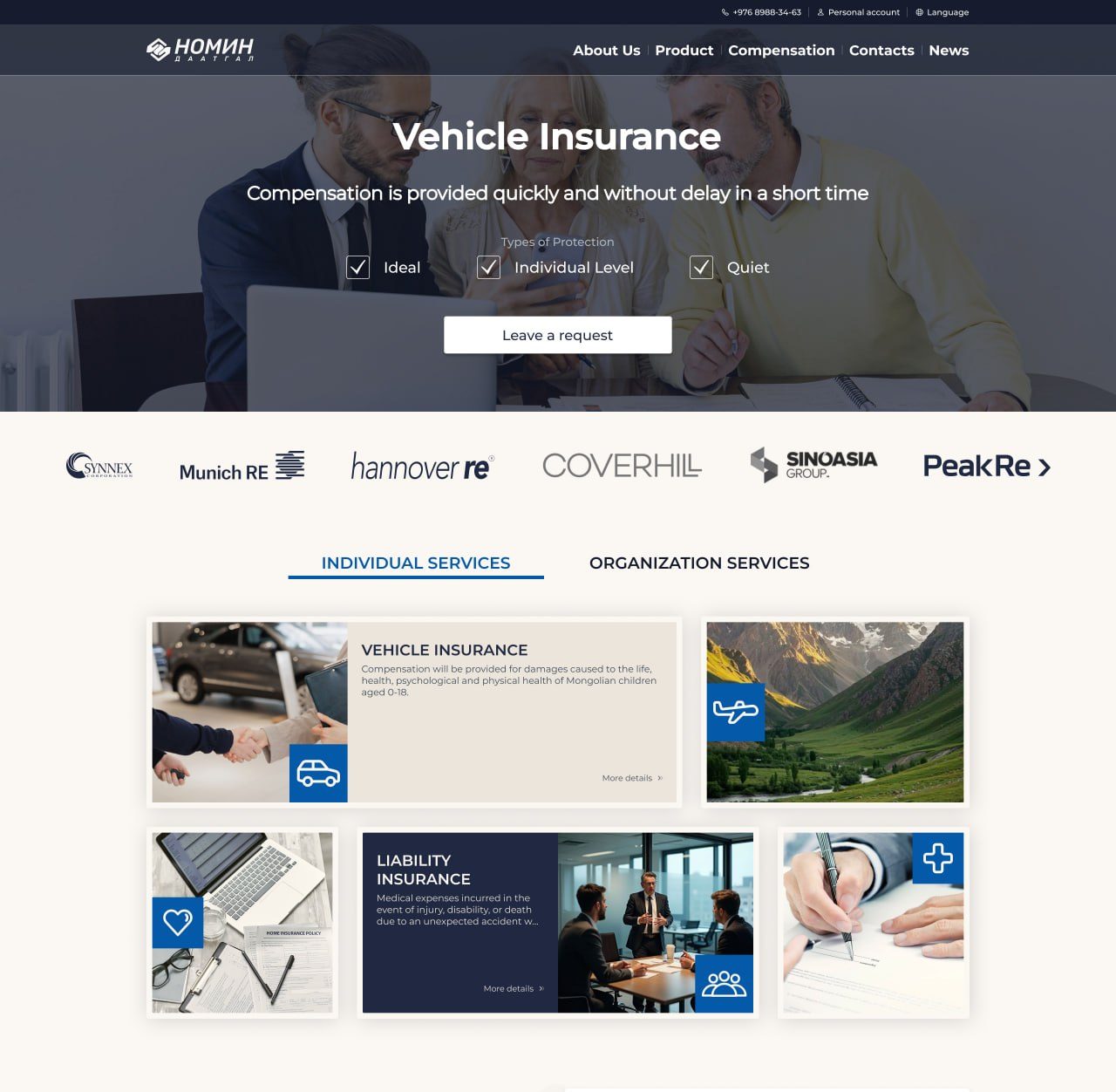
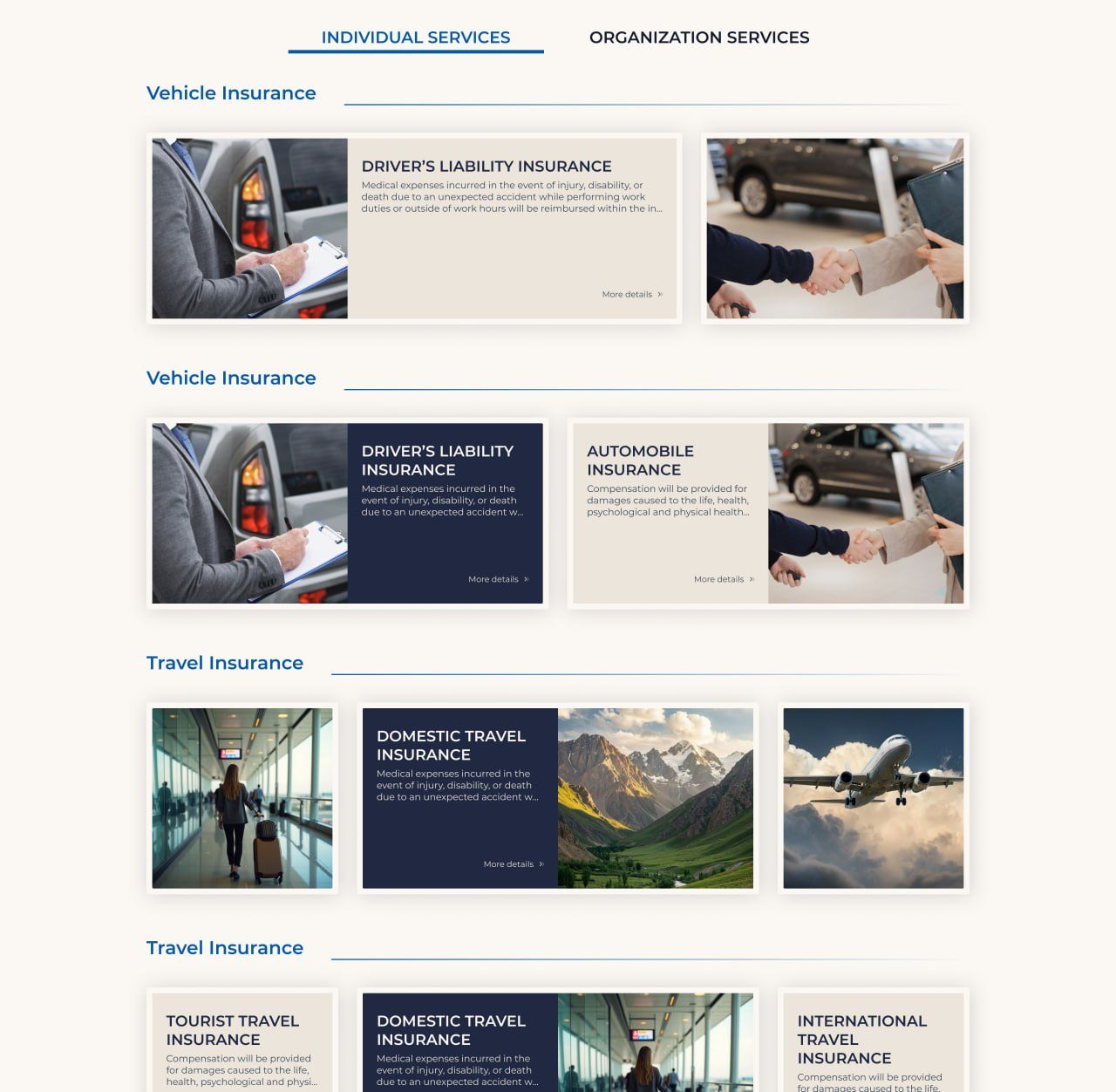
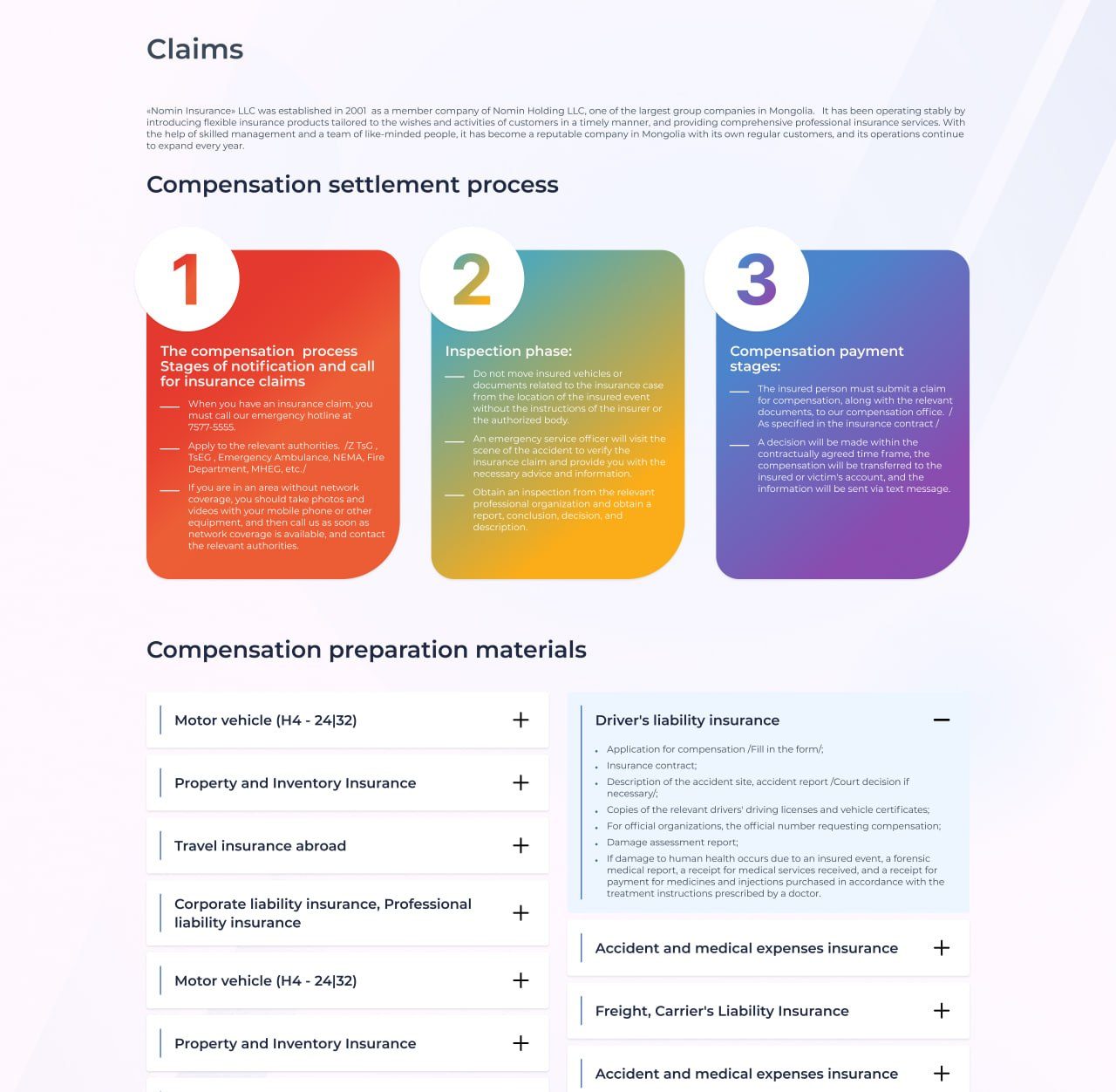
Tech stack
Task
Develop a multilingual website that can integrate with government systems, payment services and an internal loyalty system. It was also important to build a convenient admin panel for managing content and user roles.
Constraints
The project involved working with external systems, including the KHUR government platform, which imposed restrictions on data format and processing. Integrations required approval from several parties at once: the client’s technical team, the government platform and the payment providers.
Solution
We built a web application on Next.js with a Java Spring Boot backend. The site supports multiple languages and allows flexible content management per language. Integrations with KHUR, payment services and the loyalty system were implemented through a separate layer, which made the system more resilient to change. We also built an admin panel with role separation: editing sections, managing data and configuring access without developer involvement.
Challenges and how we solved them
Integration requirements were refined during the project and depended on several parties. We set up a formal process: every requirement was recorded in writing, and syncs with the client’s technical team were held on a regular schedule. For the integrations we implemented an intermediate layer that isolates the system from changes in external services.
Further development
After launch the project kept evolving toward more integrations and new features for working with customer data and loyalty programs.
Result
We launched a stable multilingual website with the necessary integrations and a convenient management system. Customer operations became more centralized, and internal processes became transparent and manageable.